In Short: What is the simplest explanation for the Microsoft Fabric vs.Synapse vs.Power BI choice ?
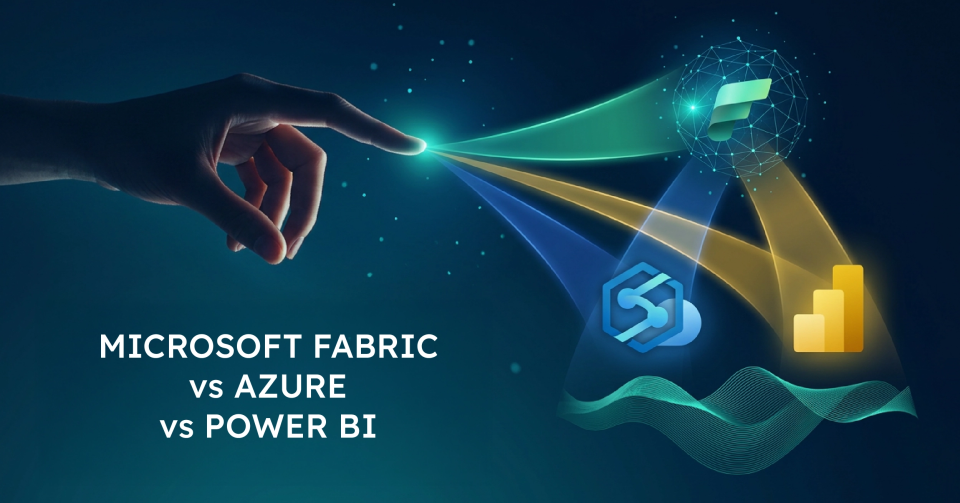
Microsoft Fabric is Microsoft’s unified SaaS analytics platform: data integration, engineering, warehousing, real - time intelligence, and BI: built around OneLake and shared governance.
Azure Synapse Analytics is an Azure - native analytics service for enterprise warehousing and big data, where you manage Azure resources and choose compute models like dedicated SQL pools and serverless SQL pools.
Power BI is the business intelligence layer(semantic models, dashboards, reports) that can run standalone or be used inside a Fabric ecosystem.
The real distinction is that Fabric is a platform operating model(one lake, shared compute, and integrated experiences); Synapse is a cloud service toolkit(pick - and - build with Azure primitives); and Power BI is the decision surface where people consume and explore insights.
Which data challenges are behind this platform choice ?
Most organizations don’t struggle because they lack tools; they struggle because tools don’t behave like one system:
- Data engineering and BI operate as separate worlds.
- Warehousing, lake, streaming, and reporting live in different places.
- Teams rebuild the same logic and debate whose numbers are correct.
Microsoft Fabric exists to reduce that "integration tax" by collapsing more of the lifecycle into one governed SaaS experience.
What is Microsoft Fabric in one paragraph ?
Microsoft Fabric is delivered as a SaaS platform with integrated experiences(Data Factory, Data Engineering, Data Science, Data Warehouse, Real - Time Intelligence, etc.) operating over a shared compute and storage model using OneLake as the centralized, logical data lake.Think of it as one tenant - wide data foundation, multiple analytics engines, and one governance plane.
What is Azure Synapse Analytics and why does it still matter ?
Azure Synapse is positioned as a “limitless analytics service” that brings together enterprise data warehousing and big data analytics: with multiple compute options like serverless SQL and dedicated SQL pools, plus Spark and orchestration capabilities in a Synapse workspace.It remains a powerful Azure - native environment when you need Azure - level control, specific networking patterns, and service - by - service architecture decisions.
What is Power BI and why isn't it replaced by Fabric?
Power BI is Microsoft’s cloud suite for connecting to data, modeling it, and delivering interactive reports and dashboards to business users.Fabric doesn’t replace Power BI so much as wrap it into a broader end - to - end platform story where the upstream data lifecycle is also unified.
What are the key differences between Fabric, Synapse, and Power BI ?
1) Operating Model: SaaS Platform vs Azure Resource Toolkit
Fabric provides integrated SaaS experiences designed to work together by default. Synapse is an Azure service composition where you choose compute models, networking, and architecture patterns more explicitly.Fabric optimizes for speed - to - value; Synapse optimizes for control.
2) Data Foundation: OneLake vs Alternative Lake Storage
Fabric uses OneLake as a built -in, single logical data lake for the tenant designed to reduce duplication.With Synapse, you commonly anchor on ADLS Gen2 or other sources and build around it.
3) Workload Convergence: One Place vs Best - of - Breed Assembly
In Fabric, data integration, engineering, warehouse, real - time intelligence, and BI are first - class experiences in the same platform.In Synapse, you can do many of these things, but you are often wiring together more components and making more platform decisions along the way.
4) BI Layer: Power BI Is the Window, Not the Factory
Power BI is ideal when your primary need is governed semantic models, reporting, and self - service analytics.Fabric becomes compelling when the problem is bigger than reporting: when you need the upstream platform to be unified too.
When should I use each Microsoft analytics platform ?
Use Power BI(alone) when:
- You already have clean, trusted data where the warehouse or lake already exists.
- The main gap is semantic modeling, dashboards, and governed sharing.
- You want fast adoption with minimal platform change.
Use Azure Synapse when:
- You need deep Azure - native control(networking patterns, workspace design, enterprise Azure governance).
- You rely on specific Synapse constructs like dedicated SQL pool patterns or serverless SQL at scale.
- You are building a custom architecture that must integrate tightly with broader Azure engineering practices.
Use Microsoft Fabric when:
- You are consolidating tool sprawl and want one governed analytics platform.
- You want OneLake and shared experiences to reduce duplication and speed delivery.
- You are modernizing BI, data engineering, and warehousing together(not separately).
- You want a platform that supports batch, near real - time, and BI in one place.
What is the strategic point most organizations miss ?
The choice isn’t simply “Fabric or Synapse or Power BI.” It is about which operating model you want.If analytics is treated like a sequence of projects, you will keep rebuilding pipelines and arguing about numbers.If analytics is treated like a managed product, you will standardize foundations, define ownership, and scale trust.
Fabric can accelerate that second model, but only if you make intentional decisions about governance, metric ownership, and workload boundaries.
Why work with Solv Systems on your analytics platform decision ?
At Solv Systems, we help clients make this choice based on outcomes, not vendor diagrams.
Strategy Before Architecture
We start with the business decisions that matter, latency expectations(daily vs near real - time), and who owns the metrics and semantic layer.
Practical Platform Mapping
We map your reality to the platforms: whether that is Power BI - only adoption paths when upstream data is strong, or Synapse architectures where Azure - native control is a core requirement.
A Clear Blueprint for Success
You walk away with a recommended target state, workload placement rules defining what runs where and why, and a phased migration plan that delivers quick wins without breaking production reporting.